
Find a Salt Lake County Property Owner
The reliable path runs from address to Assessor to deed. Find the parcel by its situs address first. From the Assessor result, copy the owner name, APN, legal description and mailing address. Then open the Recorder's property result and compare the latest deed's grantee and legal description. Names sometimes differ. Check the recording date before deciding which entry is newer.
This sequence shows who the county records as owner. It cannot show who occupies the land. Private agreements may sit outside the public result entirely. A live title question may still call for a professional search of the full instrument chain.
- Enter the property address or owner name in the Assessor Parcel Search and select the recognized result.
- Save the complete APN, Assessor Owner field, mailing address, situs and legal description.
- Use the APN or selected address in Recorder Property Search and find the latest deed.
- Compare grantee, recording date and legal description to the Assessor record.
- If a company or estate is named, search the relevant filing or court record as context, then return to the deed.
Where Salt Lake County Ownership Appears
No single screen settles a Salt Lake County ownership question. The Assessor roll is a tax record. The Recorder index points to instruments. GIS locates mapped parcels. Use each source for what it is built to show, and match results by parcel number rather than similar street names.
A Recorder result labels its field
and pairs the name with an active parcel number and legal description. That label is a useful clue. Recorded deeds, plats and amendments can sit side by side in the same list, so context matters. Read the document type before treating a name as a transfer. When the wording matters, open the instrument image itself.
| Source | What It Gives | How to Read It |
|---|---|---|
| Assessor parcel card | Owner, APN, situs, mailing address and tax facts | Administrative owner-of-record view |
| Recorder property result | Recorded-document list and current-owner block | Index lead; open the deed image for its terms |
| GIS parcel viewer | Parcel shape and neighboring geometry | Location aid, not title or a boundary survey |
| Utah business search | Entity name and filing information | Context for an LLC, not proof of parcel ownership |
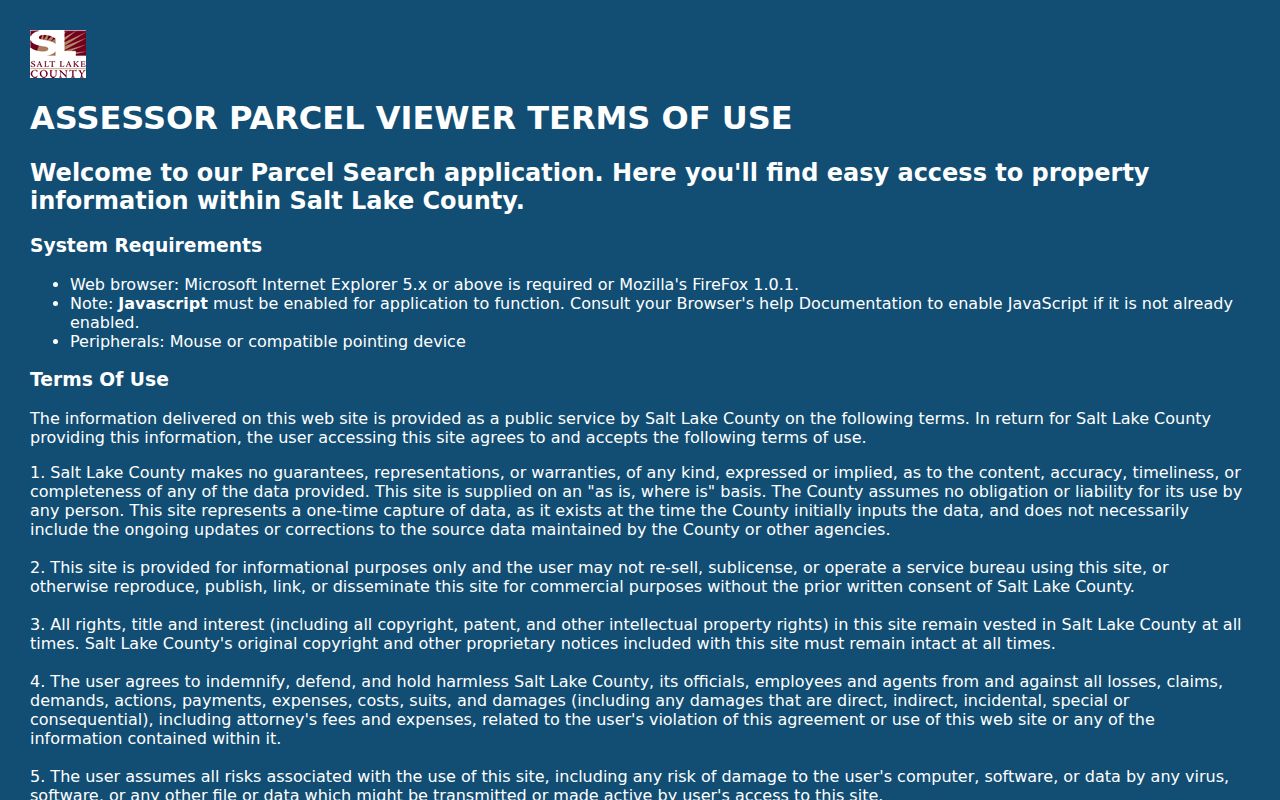
The Assessor Parcel Viewer provides the starting address, owner and APN routes.
The Recorder Property Search then links the parcel to its instrument list.
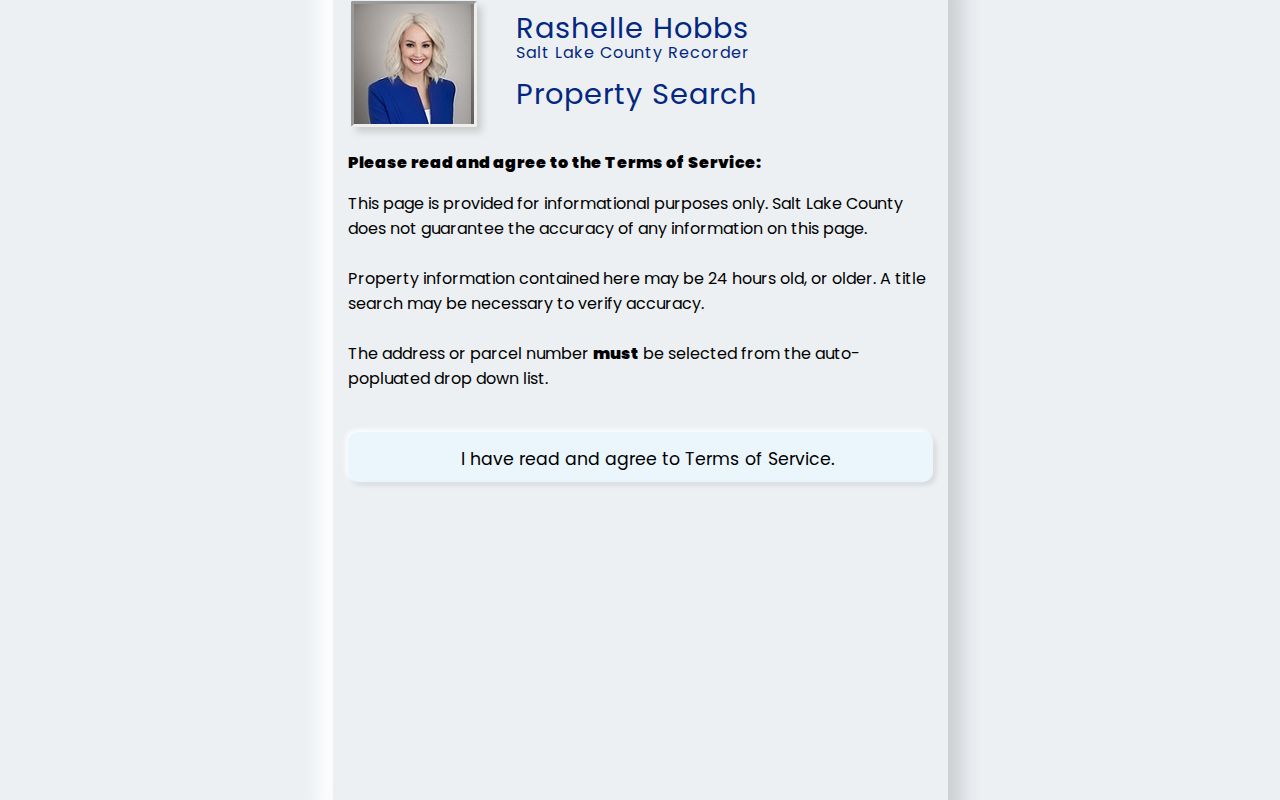
The Recorder's result notice carries a caution. County information may be at least 24 hours old, and a title search may be necessary.
Salt Lake County Owner Address Fields
The Assessor splits ownership data into three fields. Owner names the person or entity tied to the tax parcel. Situs gives the land's physical location. Mailing Address is where tax notices go. It may sit outside the county. None of these labels are synonyms, and none alone proves who lives at the property.
Keep all three fields when comparing records. A mailing address that differs from the situs is not, by itself, a mismatch. Postal labels can differ from the municipal permit jurisdiction near incorporated boundaries. Check the county jurisdiction map before sending a permit question to a city office.
- Owner of record
- The name shown in the county's administrative parcel record.
- Grantee
- The party receiving an interest in a deed.
- Situs address
- The physical address associated with the parcel.
- Title
- The legal interests and claims affecting ownership, established through the relevant records and legal review.
Confirm a Salt Lake County Deed
A Salt Lake County owner lookup should not stop at the Assessor field alone. Confirming a recent transfer takes more. Open the Recorder result and find the newest instrument. Read its date, type, grantor, grantee and land description. A mortgage, reconveyance, lien, plat or amendment can sit beside a deed without transferring anything. Document type matters as much as the name.
Recorder public information can be 24 hours old or older. The public index is separate from the paid image service. A result row may tell you which document to request but not its wording. Match the legal description to the parcel card. Note any APN change before relying on an older instrument.
For a full chain of title, use the dedicated former-owner and deed-record pages rather than treating the owner field as the whole chain.
Salt Lake County Entity Owners
The owner field in Salt Lake County property records is not always a person. It may list an LLC, a trust, an estate, a public entity, or several co-owners at once. Whatever form the name takes, search that exact spelling as it appears on the recorded deed. Utah's Division of Corporations and Commercial Code keeps entity filings. A registry lookup can surface a registered agent or the entity's history. One caution applies. A filing address is not always the property's mailing address, and no registry entry replaces the deed itself.
Estates raise their own questions. A transfer out of an estate may show up as a probate case. It may also appear as an appointment of a personal representative, an affidavit, or a deed signed by the estate's representative. Utah Courts Xchange can help you find a public case history. The Utah State Archives holds historic probate indexes. Keep one rule firm. A death certificate alone does not establish title. Read the court item to understand the event, then confirm the land transfer in the Recorder's deed records.
Salt Lake County deed records stay the anchor throughout. When the owner of record is a business, match the entity name letter for letter. Keep the parcel's legal description in view. When the owner is an estate, the court case explains who had authority to convey the land. The recorded deed proves which instrument actually reached the county records. For probate-era ownership, the State Archives lists Probate Court Series 373, covering civil and criminal files from 1852 through 1887. A case index may explain why an estate name appears in a deed chain. Treat it as context, never as a substitute for the conveyance itself. Save the case name, court, and date. Then compare the resulting deed's parcel number or legal description against the parcel card.
Limits of a Salt Lake County Owner Search
An owner name on the Salt Lake County tax roll is an administrative record. It is not proof of clean title. It does not clear every lien. It does not settle an exact boundary, and it cannot rule out a competing claim. A proper title search follows the recorded instruments and the legal interests behind them. A GIS polygon is a map aid only. Even a current deed is just one link in the chain.
Lawful use. Use owner information for property research, due diligence and civic purposes. Do not use public-record details to stalk, threaten or harass anyone.
So lean on professionals when stakes are real. For a purchase or a legal dispute, ask a title professional or an attorney. Have them review the full chain of title. For a boundary question, set the deed and plat beside a survey. For a value question, trust the Assessor's appraisal. Trust the tax notice too, rather than guessing from the owner's mailing address.
Salt Lake County Owner Record Timing
Salt Lake County publishes no fixed delay between a recorded deed and the Assessor's owner-field update. The Recorder warns that its information may be 24 hours old or older. The Assessor works on an annual appraisal cycle. It also relies on parcel data. A freshly recorded deed can therefore appear in one system. The owner of record may change in another system later. Timing gaps are normal. When two systems disagree, compare recording dates and legal descriptions before drawing conclusions. If a recent transaction is at issue, ask the Recorder or the Assessor to confirm the status. Never call a record wrong simply because the databases refreshed at different times.
For in-person help, the Assessor information counter is open Monday through Friday from 8 a.m. to 5 p.m. The Recorder's Data Services lines are 385-468-8145 for password help and 385-468-8159 for technical support. A focused GRAMA request can seek a record that is not online. It must go to the office that maintains that record.
Salt Lake County Property Watch Alerts
Once you have the right Salt Lake County parcel, the Recorder helps. It offers free Property Watch email alerts. Signup asks for an address chosen from a county dropdown plus a name and email. The parcel number populates after the address is selected. The service then sends alerts when deeds, liens, and reconveyance deeds are processed. Property Watch is a notice tool, not a guarantee and not title insurance. Its job is to flag a newly processed instrument. You can then check it in the public index yourself. Support is listed at 385-468-8176. Before enrolling, make sure the address and parcel number match exactly. Each alert is then tied to the intended parcel.