
What Salt Lake County Deeds Record
The Salt Lake County Recorder keeps the public property search that indexes filed land instruments. Think of the deed index as the finding aid. The instrument image holds the actual terms, legal description, signatures, and recording marks. One caution: results can include non-deed instruments too. A big document count does not mean the parcel sold that many times. Check the instrument type and date first. Then treat a row as a conveyance.
The Recorder's public property search asks for a selected address or parcel from its autocomplete list. It also requires acceptance of terms.
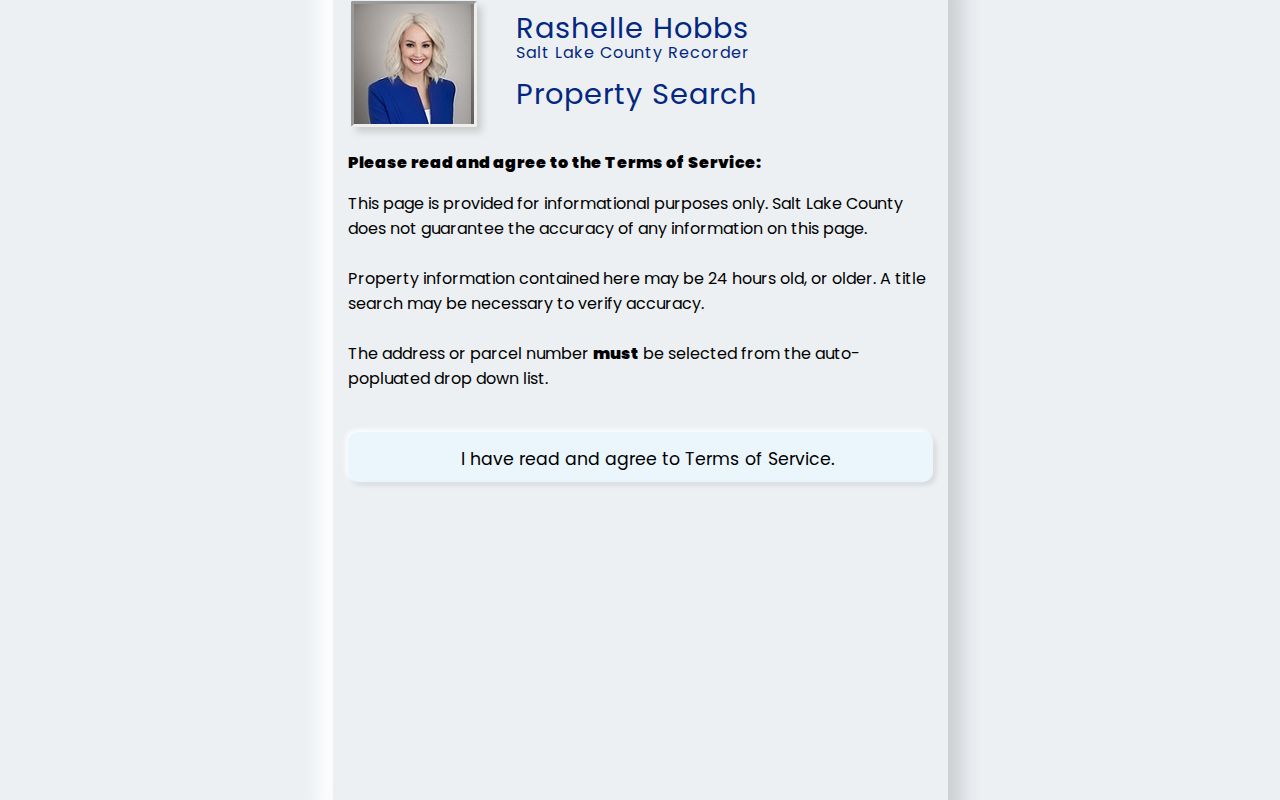
The index notice warns that information may be 24 hours old or more and may require a title search. Treat it as a route to the recorded document. It is not a legal conclusion about every interest in the land.
| Instrument Type | What It Does | Common Research Use |
|---|---|---|
| Warranty deed | Records a transfer with stated covenants | Identify grantor, grantee and recorded land description |
| Trust deed or mortgage | Records a security interest | Check an encumbrance and later release |
| Reconveyance | Records release of a trust deed interest | Pair with the original loan instrument |
| Lien | Records a claim affecting property | Find the instrument and check a related court case |
| Plat or amendment | Shows a subdivision layout or later change | Confirm lot, block, road or easement references |
| Easement | Records a right to use part of land | Review access, utility or shared-use language |
Salt Lake County Deed Result Fields
A Salt Lake County Recorder result can display an active parcel number and property address. It can also show a document count, instrument number, recording date, and document type. The parcel view adds a current owner-of-record section and a legal description. Copy the instrument number before moving to Data Services. It is the stable reference for opening or requesting a particular image.
One sample county result listed 29 instruments and one current owner. Five warranty deeds carried the same recording date. A 2022 plat and a 2024 amendment appeared in the same list. That pattern shows why document count is not a count of transfers. Several rows can record multiple steps on one day. A plat or amendment can change how a parcel is described without changing its owner.
Compare the date, instrument type, grantor, and grantee against the legal description. The same owner name may appear on a lien, mortgage, or release. A deed row is the ownership instrument. The related rows explain financing, claims, or parcel layout.
Trace Salt Lake County Deeds Backward
The grantor transfers an interest; the grantee receives it. Start with the parcel's latest deed. Record both names, the date, instrument number, and legal description. The current grantee is usually the next name to hunt backward as a prior owner. Find that party as grantee on an earlier deed. Then read that instrument's grantor and repeat.
Work backward one recorded transfer at a time. Match the legal description on each deed, not just the names. A parcel that split or combined may have changed its APN. So the land description and the parent plat help establish whether an older deed covers the same ground. A grantor-grantee sequence is a research method. It is not an abstract of title or proof that no competing claim exists.
- Grantor
- The named party conveying an interest in the recorded instrument.
- Grantee
- The named party receiving that interest.
- Chain of title
- The ordered sequence of recorded transfers and related instruments for a parcel.
- Reconveyance
- A recorded release associated with a prior trust deed, not a new ownership transfer.
Salt Lake County Deed Image Access
The public Salt Lake County deed index stands apart from image access. Recorder Data Services lists a $5 24-hour access option. It also posts fee notices for records and plats. Records other than plats carry a $40 flat fee instead of a per-page fee. Added charges apply to descriptions over ten. Plats run $50 per sheet plus $2 per lot or unit. Fees can change. Confirm the current schedule before paying.
The Recorder Data Services access page displays the account options and image-fee notice.
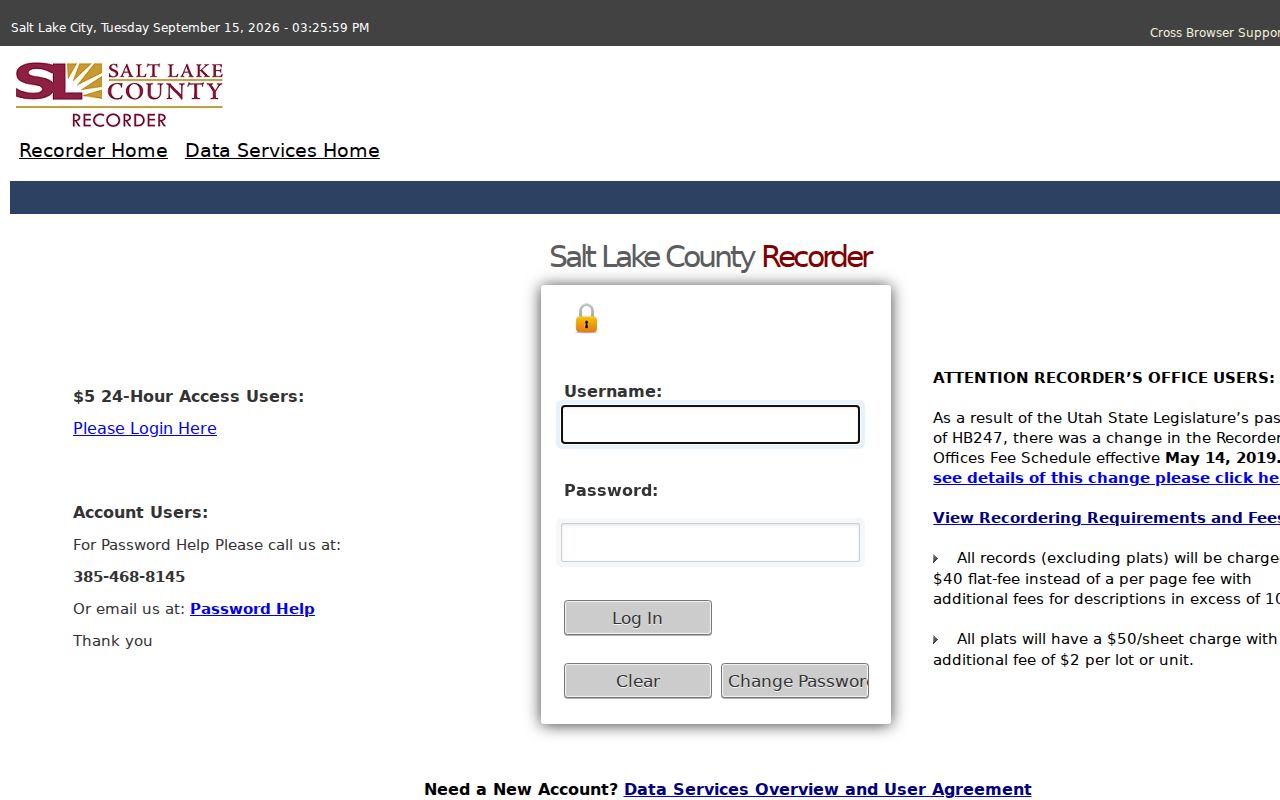
For a specific copy request, have the instrument number, recording date, parcel, and document type in hand. The Recorder publishes no current counter schedule online. Password help is listed at 385-468-8145, and technical support sits at 385-468-8159. Ask whether the copy is informational or certified if it will serve in a formal matter.
Salt Lake County APN Chain Gaps
An APN search is fast for a current parcel. Older Salt Lake County instruments, though, may lack a current APN or carry an earlier parcel reference. Streets get renamed, addresses change, and lots split. When the index stops returning an older deed, carry the legal description and book/page references backward. Search both grantor and grantee names. Test variants in spelling or entity style too.
The county's retention schedule names permanent abstract indexes, property transfer records, and a deed-books index. That deed-books microfiche index can include owner, address, description, tax ID, acres, deed book and page, mortgage code, use, and values. Ask the Recorder or Archives for the series and volume matching your reference. The online portal states no exact earliest searchable year.
Older Salt Lake County Deed Books
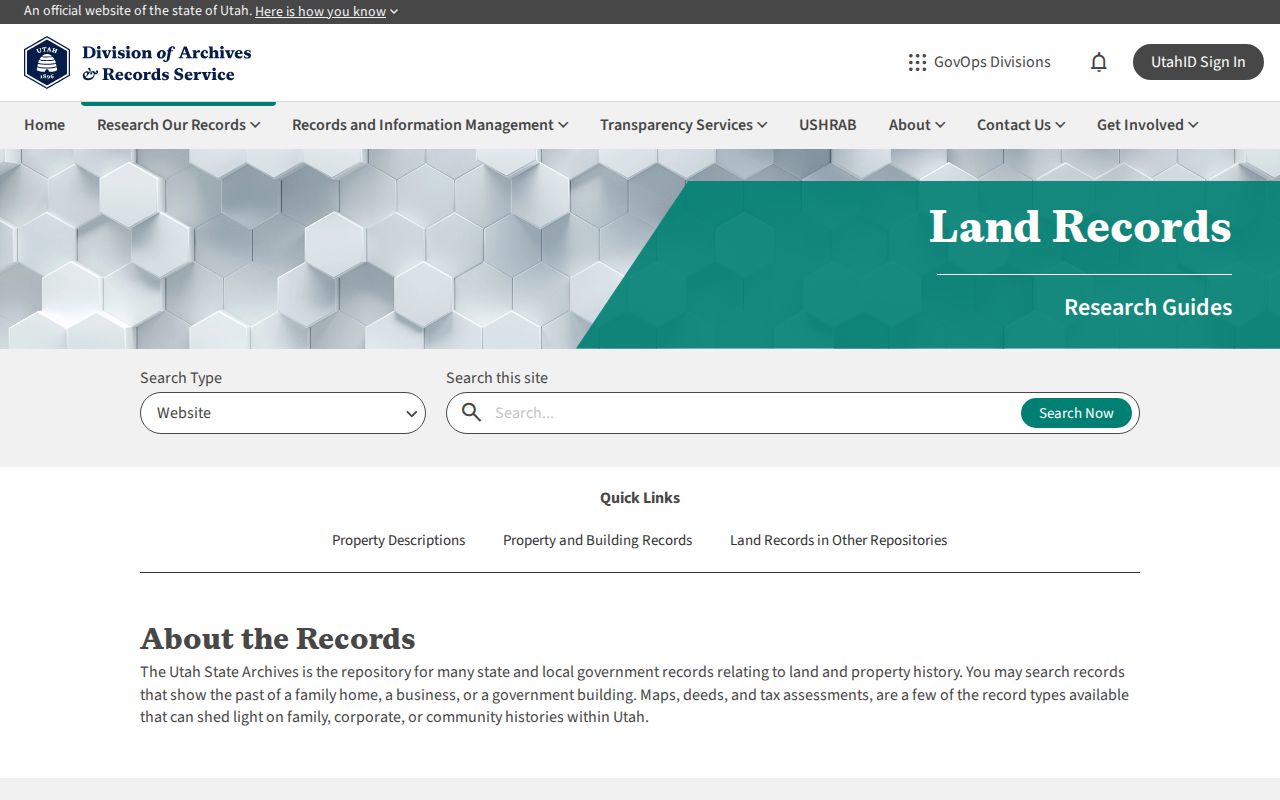
Utah State Archives treats old land research as a set of separate tools. An abstract follows a title and its encumbrances over time. An assessment roll may list the owner of record, the address, and the legal description. It can also show land and improvement values, tax units, and payment status. A subdivision index ties a subdivision name to its section, township, and range. It also covers the plat, block, and lot. Each record answers a different question in a Salt Lake County land search.
The Archives land-record guide describes these collections. It also shows how custody of Salt Lake County property records is divided between offices.
Older plats were sometimes pulled when map books were updated. Recent plats stay with the Recorder. A deed reference may surface at any time. Preserve the book and page exactly, volume included, even if no image sits online. Archives staff can search their catalog or inventory for a reference copy, a microfilm reel, or a digital surrogate. The reference room at 346 S Rio Grande Street in Salt Lake City works by appointment. A call or email ahead of a visit saves a trip. FamilySearch and the Marriott Library often hold digitized books, maps, and directories. Those can help place a parcel historically. None of them substitutes for the official recording record. Bring the final ownership question back to the County Recorder. Ask for the instrument that was actually filed.
Salt Lake City Deed Custody
Historic Salt Lake City deeds can rest with the County Recorder because city recorder records passed to county custody on April 5, 1867. That date is a custody clue. When an older city address fails to appear under a modern municipal office, the county's historic index is the next stop. Keep the street, owner, and legal description in their contemporary wording while searching. Some files cross from land into estate or dispute territory. Utah Archives holds Salt Lake County Probate Court Series 373, with civil and criminal files from 1852 through 1887. Its index can supply a case reference for a copy request. A probate file may explain why a transfer happened. The deed still remains the instrument that records the conveyance itself.
Salt Lake County Recording Alerts
The Salt Lake County Recorder offers Property Watch. It is a free alert service, and it covers processed documents tied to an enrolled property. Signup needs an address picked from the county dropdown, a contact name, and an email. The parcel number fills in once the address is chosen. Alerts cover deeds, liens, and reconveyances. Support sits at 385-468-8176.
An alert is a prompt, not title insurance. It cannot promise that no other recording touches the property. Match any notice against the public document list. Pull the image through Data Services when the language matters. Keep the APN and instrument number handy. That way a new result links to the right parcel.
Check the instrument itself. A deed, plat, lien and reconveyance can sit together in one result list, but each has a different effect. Read type, date and legal description before drawing an ownership conclusion.
Request Salt Lake County Deed Records
When an instrument is absent from online deed records, identify the custodian. Hand that office strong search keys. The Utah Open Records Portal accepts GRAMA requests for agency records. Name the parcel, the instrument or book and page. Add the approximate date, the parties, and the format wanted. Specific requests get better results. A statutory or court restriction can still withhold or redact records.
Older Salt Lake County land series start with the Recorder's retention reference. The Archives land guide also helps. When a court order explains a transfer, Utah Courts Xchange can locate it. The historical probate index can locate it too. Then return to the Recorder to confirm the instrument itself. Ask the office about current copy fees and the earliest years in its online index. A focused request includes both party names and the approximate recording date. Include the APN, and the exact book and page or instrument number. The County's GRAMA route reaches records the named agency holds. It is not a way around confidential classifications or a sealed court file. Historical index searches go smoother when the record series and its name index structure are named. A written answer from the custodian tells you the item's form. It may be a paper volume, microfilm, an image, or a record held by the Archives.