
The Salt Lake County Owner-of-Record Card
The Assessor's Owner field is the heart of the Salt Lake County owner-of-record card. It names whoever the tax parcel is assessed to. Read it alongside the mailing address, situs address and legal description. Each label answers a different question, and mixing them leads to wrong conclusions. The Recorder's public result adds a Current Owner(s) Of Record block next to its document list. That block can be checked against the Assessor entry. Neither display should stand alone; look at when the supporting instrument was actually recorded. The County Assessor's official parcel and value services explain the owner and market-value role.
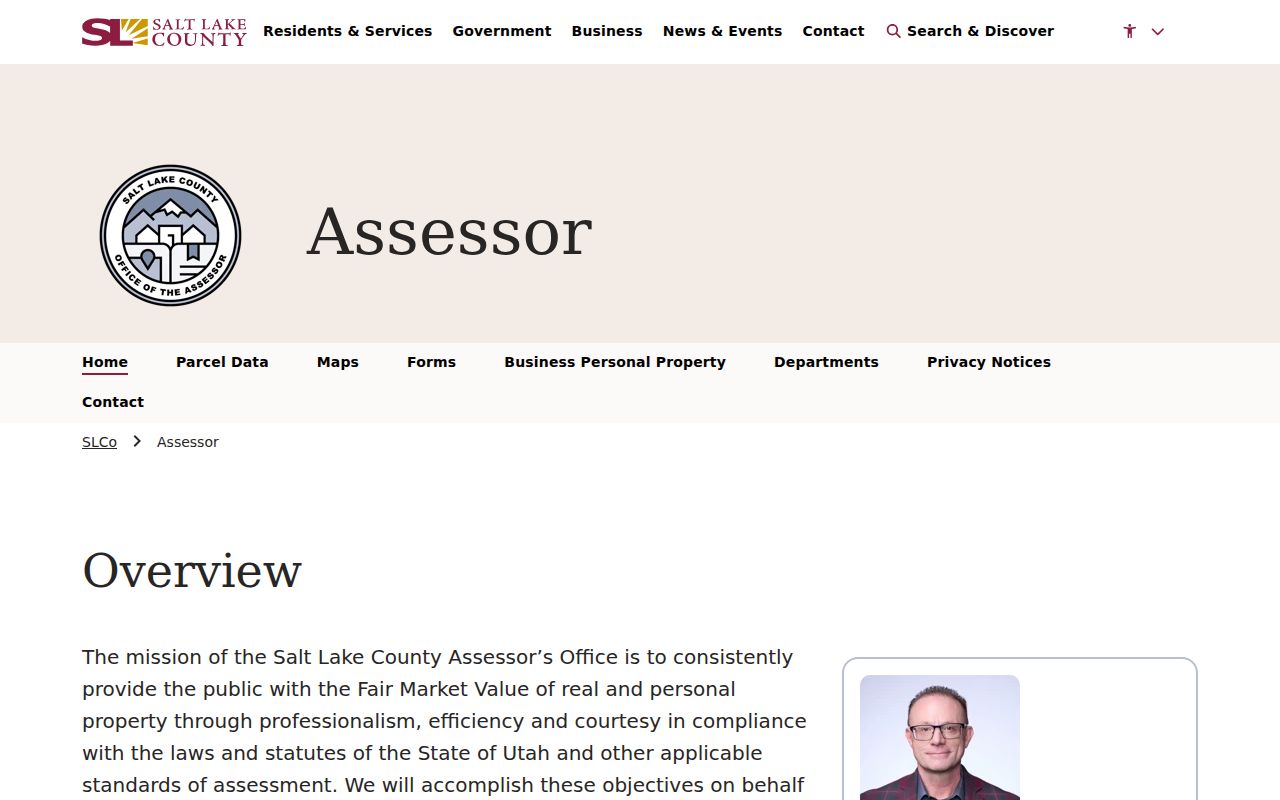
The public Assessor page introduces its parcel and value services. Confirm any owner name against the latest Recorder deed before treating the transfer as complete.
| Field | What the Current Record Shows |
|---|---|
| Owner | Name recorded on the Assessor tax parcel |
| Mailing Address | Address used for notices; it can differ from the parcel location |
| Situs or Property Address | Physical location associated with the parcel |
| Legal Description | Written land reference to compare with a deed |
| Latest deed reference | Recorder instrument to review for the newest filed transfer |
The County Assessor sits at 2001 S State Street in Salt Lake City. Weekday hours run 8 a.m. to 5 p.m. The office phone is 385-468-8000.
The Recorder's public result carries the exact heading "Current Owner(s) Of Record." Below it sits a name and document list. That heading helps tie an Assessor card to a recent filed instrument. Before relying on a single name, read the deed carefully. Check the grantor, grantee, recording date and legal description. The public result does not expose every deed term. Viewing the image itself is a separate Data Services step.
How Current Is Salt Lake County's Roll?
No fixed deed-to-roll update lag is published for Salt Lake County. The Recorder notice says public information may be 24 hours old or older. The Assessor runs annual appraisal using parcel data. Neither fact establishes a precise schedule for a given transfer. Treat the owner field as a current administrative record with a date-sensitive limit.
Suppose a sale just closed or a deed was recently recorded. Search the Recorder list for the newest instrument first. Compare its recording date, grantee and legal description with the parcel card. If the two records still disagree, call the office that holds the field. Ask whether a refresh or indexing step is pending.
The recorded-document page repeats its warning. Property information can lag by at least 24 hours, it says. Annual appraisal sets a valuation schedule, not a promise about owner-name timing. No formal update interval appears anywhere in the county's material. Keep both the Recorder entry and the Assessor snapshot. Give each its date, so a later review can see why the records differed.
Salt Lake County Mailing and Situs Fields
A Salt Lake County parcel carries two addresses that often confuse people. The mailing address is where the owner gets tax notices. The situs address is the land's physical location. The Owner field names a person or entity, not an occupant. All three can differ without anything being wrong. Keep separate notes when confirming a current owner or matching a deed to the right parcel.
City labels add another wrinkle. A postal address can sit outside the permit jurisdiction that governs the parcel. Salt Lake City warns that Magna, Kearns, Emigration Canyon and other unincorporated districts are not incorporated Salt Lake City. Check the county jurisdiction map before choosing a city portal for permit history.
- Owner of record
- Name shown in the county's Assessor parcel record.
- Mailing address
- Where property tax correspondence is sent.
- Situs
- The physical address used to locate the land.
- Recording lag
- The period before an instrument appears in a separate public system; the county has not published a fixed interval.
Confirm a Salt Lake County Transfer
A Recorder property result ties the parcel number to a document number and recording date. It also lists the instrument type, owner block and legal description. Start with the address or parcel number. Then inspect the newest deed row. The public index is free of the paid image service. A row proves an instrument was recorded. But only the image shows the full terms and how title is vested. The Recorder public search is the county route for the latest recorded document list.
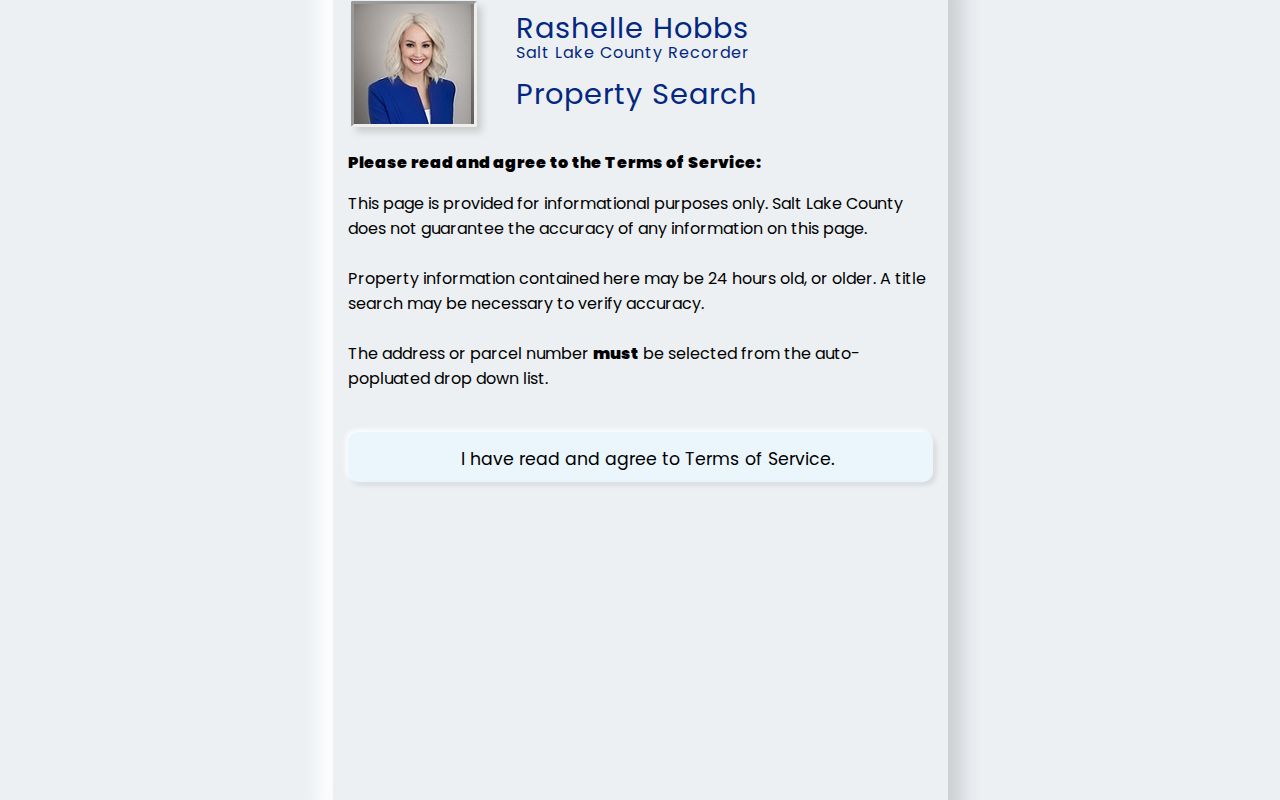
Compare grantor, grantee, instrument type, date and land description across records. A lien, trust deed, plat or reconveyance often sits near a deed without transferring ownership. The newest deed and the Assessor Owner field may disagree. Treat the recording date as a clue. Ask the custodian office to confirm which record reflects the current status.
Salt Lake County Trust and Company Owners
The owner field in a Salt Lake County property record may name an LLC, a trust, an estate, a public agency, or several people at once. Search the exact name as the Recorder indexed it, punctuation and entity suffixes included. Utah's business registry can show company filings and a registered agent. That address is not necessarily the parcel's mailing address. Nor does it establish personal ownership.
Trusts and estates add another layer. A court order, a representative appointment, or a later deed may explain why the owner of record changed. Utah Courts Xchange and the Archives indexes can surface a public case reference. The Recorder instrument still shows how the land moved. A death certificate alone is not a title record.
The registry can help you read an LLC's name. Its registered-agent details, though, are not a deed. They are not an Assessor owner field either. The Recorder index may list an entity or several co-owners. Match the spelling, the parcel, and the legal description instead of inferring an individual's interest from a company filing.
Salt Lake County Owner Names After a Deed
The Salt Lake County Assessor record may briefly keep an earlier name after the Recorder indexes a new deed. The two systems refresh on their own schedules. The county publishes no fixed change window, so check both instead of counting days. Save the APN and the recording number. Those keys make a focused call or written request far easier than describing a street location alone.
County records also warn that public data can be incomplete or old. Paid access sometimes guards the deed image itself. Use the public result to request the right instrument. Recorder Data Services lists password help at 385-468-8145 and technical support at 385-468-8159. Verify image fees and counter hours before you travel.
Salt Lake County Property Watch Alerts
Salt Lake County Recorder Property Watch emails an enrolled owner when deeds, liens, or reconveyance deeds are processed. The free form asks for an address chosen from the County dropdown plus a contact name and email, and the parcel number fills in afterward. Support is listed at 385-468-8176. When an alert arrives, check the public document list for the new instrument.
Property Watch is a notification service only. It is not a title guarantee. It cannot stop a filing either. Confirm the alert's instrument number and type with the Recorder. Then decide whether the image needs review. Enroll only after confirming the right situs address and APN, so a nearby parcel is not confused with the one you mean.
Get Help With Salt Lake County Owner Records
An unclear owner field has a simple fix. Ask the Assessor about the tax-roll entry. Ask the Recorder about the instrument. The Assessor publishes its phone and information-counter hours, and the Recorder can confirm its counter hours directly. An online index may also demand a selected address, an exact name, or a complete parcel key before returning anything.
Records that are not online fall under GRAMA. Send a specific request to the governmental entity that maintains the record. Include the parcel number, the owner spelling, the instrument or tax year, a date range, and the format you want. A request cannot override confidential classifications or court sealing. The full method for tracing an owner from an address appears in the Salt Lake County ownership lookup.
Archives research runs by appointment only. The address is 346 S Rio Grande Street. Reference staff answer at 801-531-3847, and the main Archives number is 801-531-3848. Bring the APN, the instrument number, the exact owner spelling, and the legal description when asking for older material; the Assessor and the Recorder remain the county's authoritative sources for the present name and the transfer that supports it.