
Trace Former Salt Lake County Owners
Ownership history is built in reverse. Start with the newest deed tied to the APN and identify its grantee. Then hunt for the instrument through which that same party took title. Its grantor is the previous owner. Keep going. At every step, match the legal description and recording date. Several instruments can share one date, and only careful comparison separates them. Guessing at an old name rarely works; the chain does.
| Transfer Date | Grantor to Grantee | Deed Type | Book or Page |
|---|---|---|---|
| Latest result date | Read the parties in the deed image | Confirm whether it conveys title | Copy the reference shown |
| Prior recording date | Search the current grantee as prior owner | Compare deed type and legal description | Carry the earlier book/page forward |
| Earlier chain link | Search the prior grantor as grantee | Check for estate, trust or parcel split | Use Archives if the index stops |
A sample Recorder result for one Salt Lake County parcel showed several 2021 warranty deeds, followed by a 2022 plat and a 2024 amendment. The public sample left some party names and historic book and page references hidden. Those details come from the instrument image, not from assumption. Also note that a plat or amendment can appear in the parcel list without being an ownership transfer at all.
Salt Lake County Grantor-Grantee Search
The grantor conveys an interest; the grantee receives it. In a Salt Lake County chain search, the current grantee becomes the key name. You search that name as the prior owner. Find that name in an earlier grantee entry. Read that deed's grantor, and repeat the process. Move by recording date and instrument number rather than by a broad name match alone.
Compare the legal description and APN on every candidate instrument. A common surname or a similarly named LLC can point to a different parcel entirely. Parcel numbers also change when land is divided or combined. Use the deed description and plat to confirm the earlier record covers the same land.
Work both sides of the index when names are common. Search the current grantee as a prior owner. Then check the earlier grantor as the one who conveyed the property. Spelling, initials, and company endings vary across older documents. Record each variation. Accept a candidate only when its date and land description tie to the same parcel.
- Grantor
- The party transferring the recorded interest.
- Grantee
- The party receiving that interest.
- Chain of title
- The ordered set of recorded transfers affecting a parcel.
- Reverse index
- A way to follow a current grantee back through earlier grantor and grantee entries.
- Quitclaim and warranty
- Different deed forms; read the instrument language rather than assuming they carry the same promises.
Confirm Salt Lake County Land by Description
Historic Salt Lake County deeds often describe the land by section, township, and range rather than by a modern street address or APN. They also cross-reference earlier records. A platted parcel may instead be named by subdivision, block, and lot. Save the full description from each instrument. Compare it against the plat index.
Addresses get renamed and renumbered, municipal boundaries shift, and parcel numbers are reassigned. A shared mailing city proves nothing about whether the land is the same. When the APN trail breaks, the legal description becomes the bridge. It connects modern records to older deed books and grantor-grantee indexes.
Salt Lake County Online Index Depth
The Recorder's public pages state no precise start year for the online grantor-grantee index. Never treat an assumed year as a portal cutoff. When an older owner does not appear online, try name and legal-description searches, then ask the Recorder which abstract, deed-book, or microfiche series covers that period.
Online start year not verified. The index may not cover the whole historical chain. Use the Recorder retention schedule and Archives land guide to identify earlier books; confirm the correct series with the custodian.
The County retention schedule lists permanent abstract indexes, property transfer records, and deed-book indexes. The microfiche finding aid can include owner, address, legal description, tax ID, acreage, deed book and page, mortgage code, use, and value. Those fields help reconstruct ownership. A modern parcel search no longer finds the prior reference. Request the series or book by its reference instead of asking broadly for every prior owner. The retained index can point to a deed image or a paper book. The web portal has no matching year. No universal online cutoff exists. The custodian or the Archives must confirm which index covers the date in question.
Salt Lake City Deed Custody
Historic Salt Lake City Recorder records passed to the County Recorder on April 5, 1867. A nineteenth-century deed for a city address may therefore sit in county custody. Search both historic wording and current county indexes. Mention the custody history when requesting an older record. This is a concrete example. A modern address or agency name may not tell you where a deed is kept. The Utah Archives land-record guide covers deeds, abstracts, tax rolls, subdivision indexes, and plats.
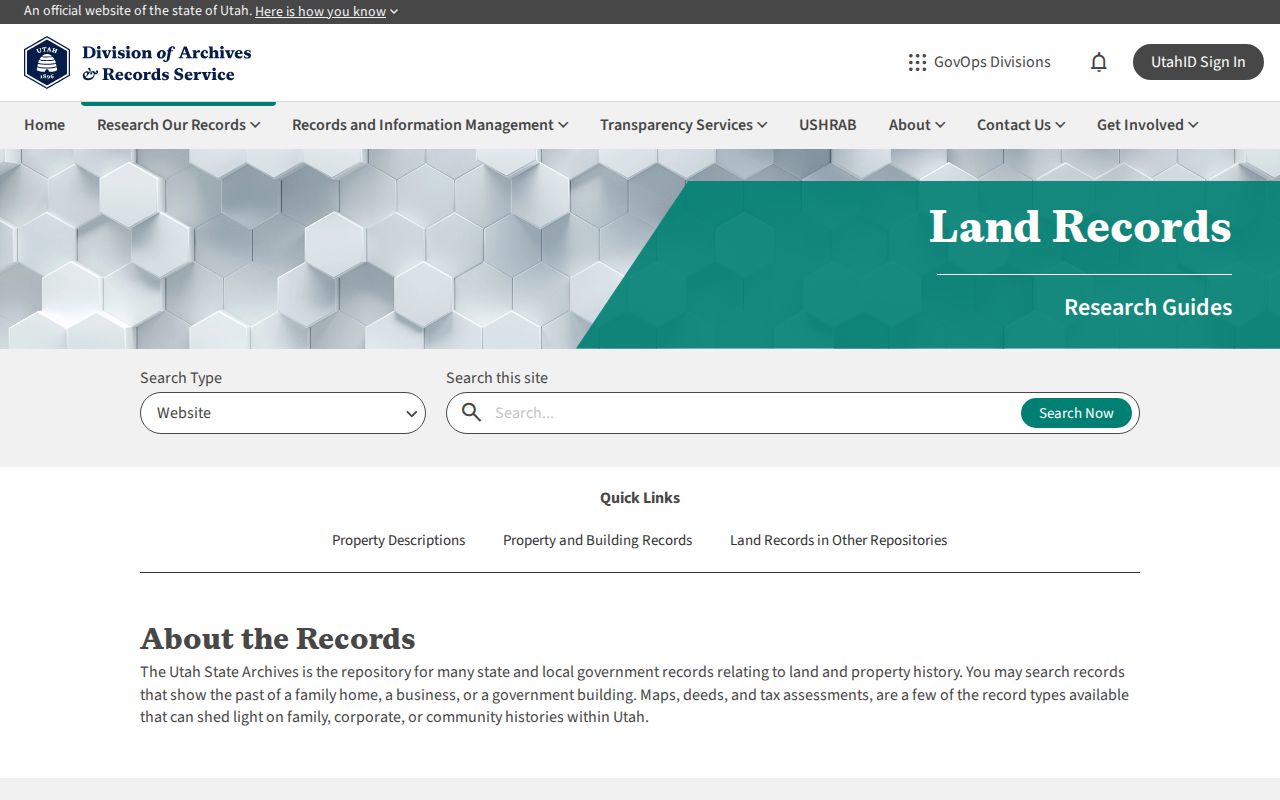
Some older plats no longer sit in the current map books because those books were updated. Preserve the reference from the index first. Then ask where the archive copy or microfilm is held.
Salt Lake County Probate Transfers
Death can break a chain of title. Probate files often explain what happened next. A court may name a personal representative. An estate deed may also pass the Salt Lake County parcel to an heir. For deaths between 1852 and 1887, Salt Lake County Probate Court Series 373 holds the civil and criminal files. The Utah Archives name index can supply a file reference. More recent probate history and orders appear in Xchange. Private or sealed cases stay out of the public view.
The Salt Lake County probate index is the starting point for searching that historic series.
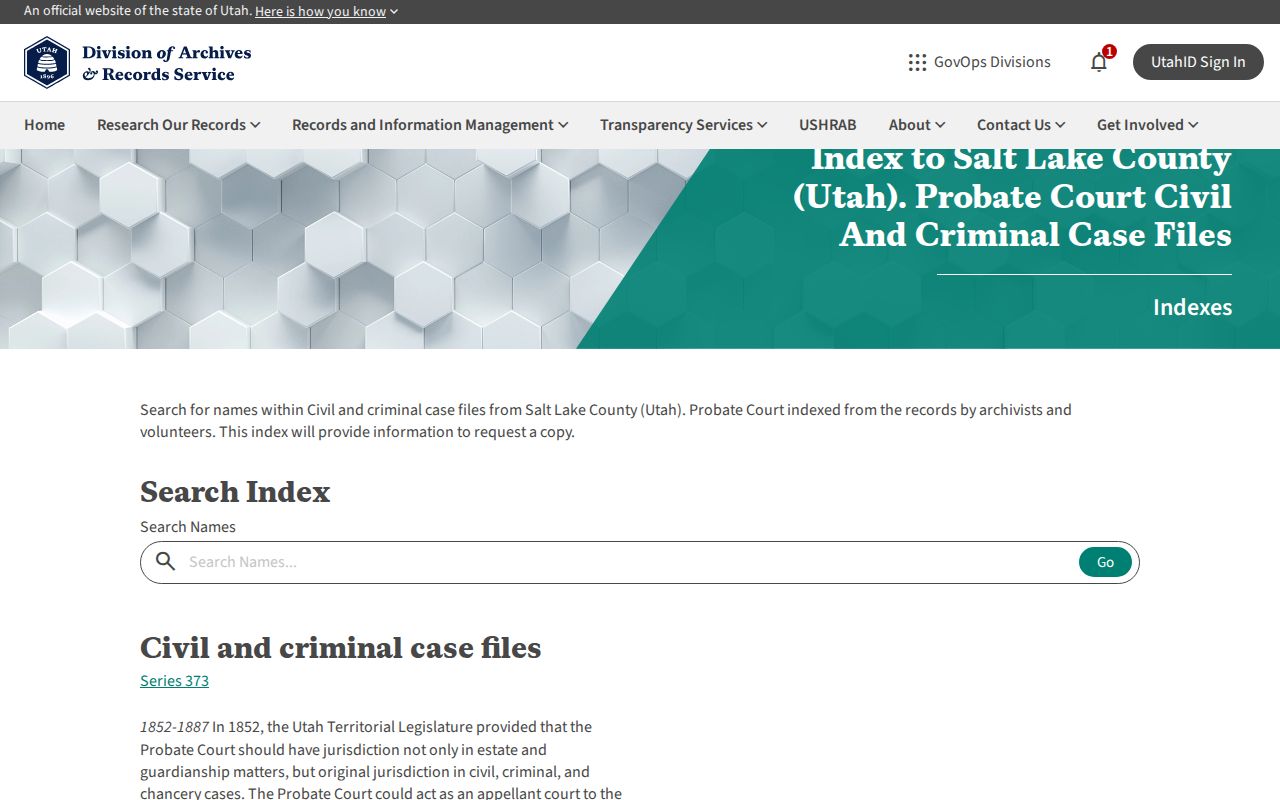
A probate file tells only part of the story. The deed or order recorded with the Recorder is what actually confirms the Salt Lake County land transfer. A death certificate, by itself, never establishes title. Tie the probate trail to the parcel by keeping the case name, series number and order date beside the APN.
The State Archives reference room sits at 346 S Rio Grande Street. Appointments are required. Reference staff answer at 801-531-3847. Before a visit, ask whether the named probate or land series exists as an index, microfilm or digital copy, and jot the catalog or call number so the parcel history stays followable later.
Salt Lake County Digital Archives and Books
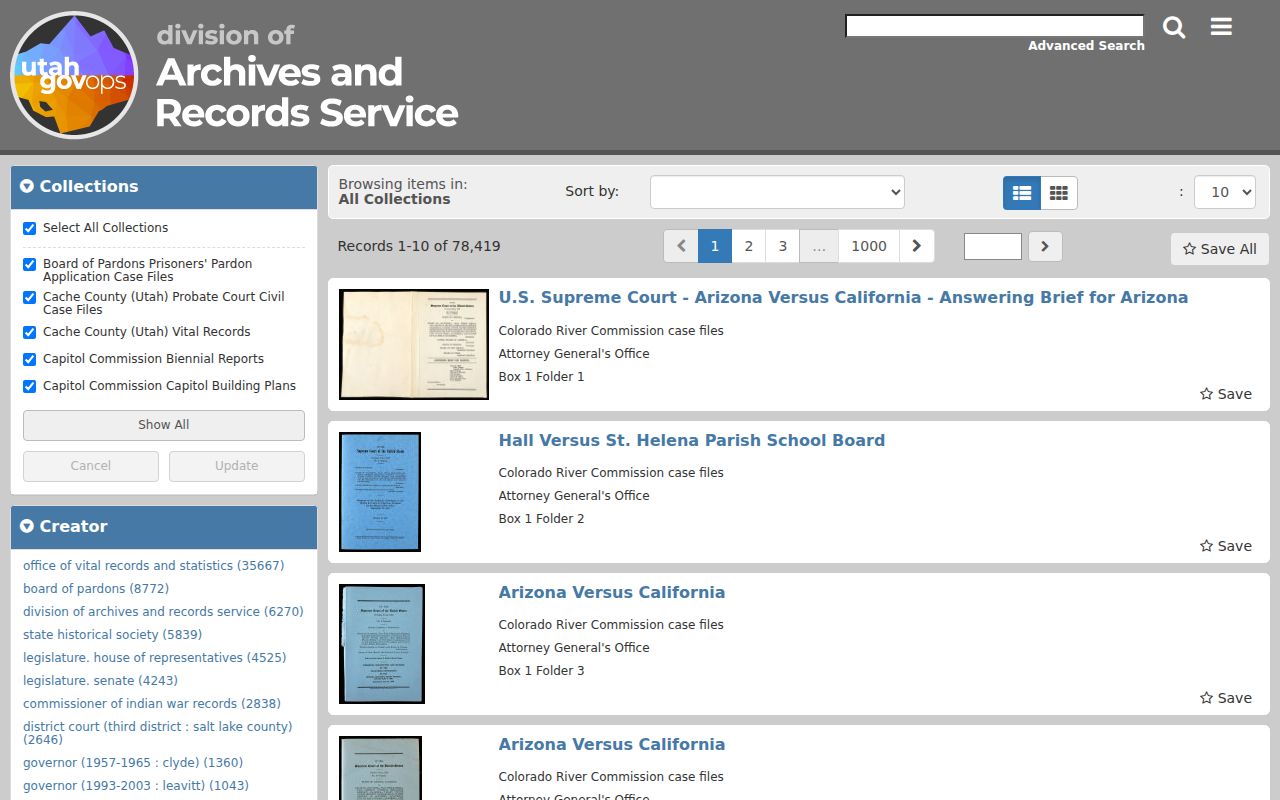
Utah State Archives runs a digital search with filters for collection, creator, relation and keyword. It also offers sort and page controls. Salt Lake County land history often reaches beyond the screen. Microfilm, deed books, tax rolls and old plats hold clues for a property search. So do directories and maps. FamilySearch and the University of Utah Marriott Library help surface digitized books and local-history material. Current title evidence stays with the official record custodians. The Archives Digital search offers a quick way to filter collections and creators.
Planning a visit? The Archives reference room sits at 346 S Rio Grande Street in Salt Lake City. Appointments are required. Reference staff answer questions at 801-531-3847, or call the main Archives line at 801-531-3848. Before traveling, ask whether a book, reel, series inventory, or digital surrogate exists. Do this for the records you need.
Work Back Through Salt Lake County Deeds
Careful notes anchor a former-owner search. Keep one row per instrument. Record the date, instrument number, type, grantor, grantee, APN and legal description. When a new row no longer matches the Salt Lake County parcel, stop. Check the plat or a split and combination record next. Extending the wrong chain only compounds the error. Mortgages, reconveyances, liens and amendments belong in the history, yet they may not transfer title at all. That distinction matters.
If the online index dead-ends, pull the book and page from the retention index and request the older deed record directly. A GRAMA request can reach an agency record. Court files follow separate access rules. For a current certified copy or a firm title conclusion, rely on the Recorder's image access or a qualified title professional.
The public index can return long lists. One Salt Lake County result lists 29 instrument rows, including five same-day warranty deeds, a plat and a later amendment. A long list is not a chain of ownership. Follow only instruments that transfer an interest, and match every candidate to the land description before moving to the next grantor or grantee.