
Salt Lake County Property Tax Records
Three offices shape a Salt Lake County property tax lookup. The Assessor values each parcel. The Treasurer publishes the annual notice, tax district details, payment options and delinquent balances. Appeals go to the Auditor and the Board of Equalization. Each office answers a different question on its own schedule. One record may lag another because of that.
The table maps each fact to its office. Use the live service for a current balance. Keep the parcel number handy when moving between offices.
| Tax Record Field | What It Shows | Where to Find It |
|---|---|---|
| Market or assessed value | Assessor's estimate used to value the parcel for tax purposes | Assessor Parcel Search and parcel card |
| Taxable value | Value after the applicable assessment level and any exemption | Assessor record and tax notice |
| Tax district and entities | Jurisdictions that levy charges against the parcel | Treasurer notice and tax-code resources |
| Certified rate and total due | Rate applied to the tax base and amount billed | Current annual notice |
| Payment or delinquency | Whether the bill is paid or remains due | Find Delinquent Property Balance service |
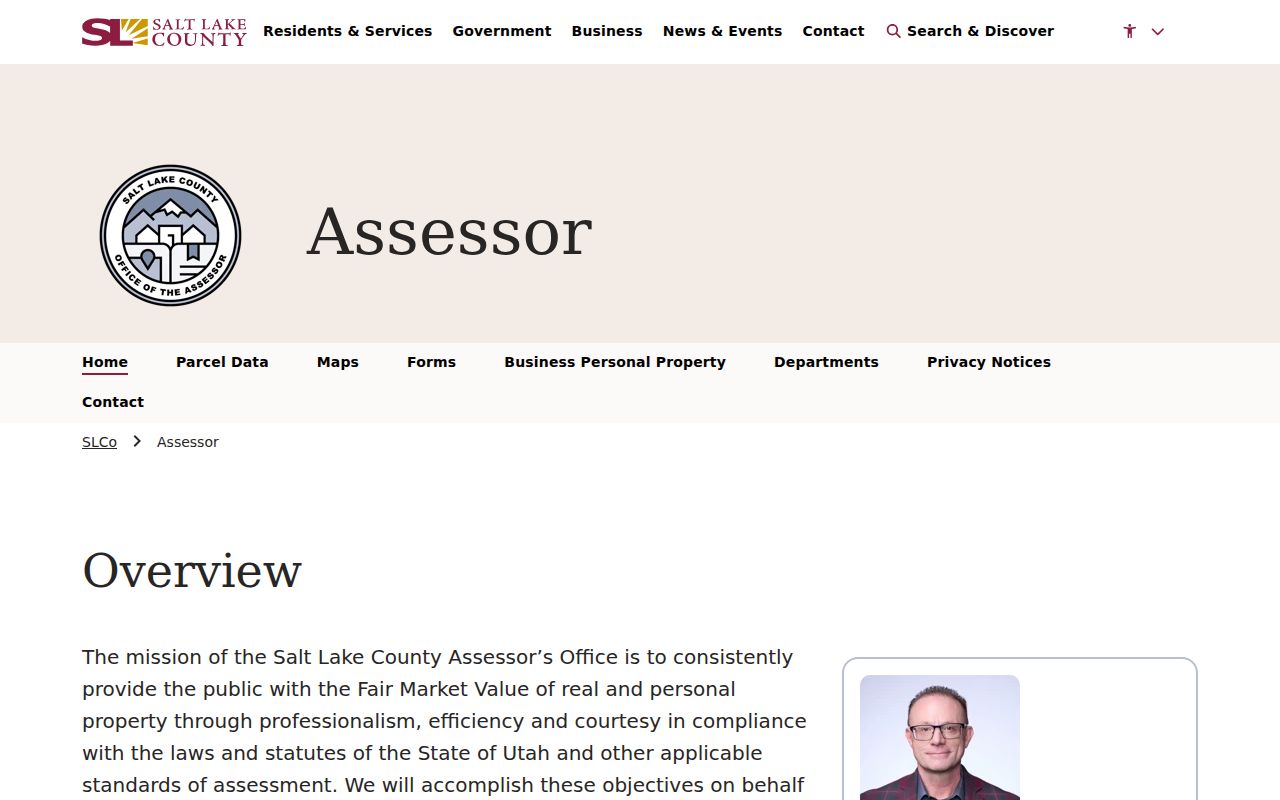
The Assessor's public information page describes its role in setting fair market value.
These distinctions matter when a bill jumps or a value shifts. One parcel can carry a market value, a taxable amount after the residential ratio, and a final bill shaped by the district rate and any exemption. Reading all three keeps the surprise manageable.
Salt Lake County Tax Calculation
The calculation starts with taxable market value. The assessment ratio comes next, then any exemption is subtracted. The district's tax rate multiplies what remains. County guidance puts residential property at 55 percent of market value. Other property sits at 100 percent. That ratio drives taxation only. It does not predict a sale price.
The county defines a tax rate simply. It is the approved budget divided by the total tax base. Collection history and Board of Equalization adjustments fine-tune that figure. A bill can move for many reasons. The value, taxable status, exemption, district boundaries or adopted rate can each shift. Read the notice's values and entity list rather than guessing from a neighbor's address.
The base holds locally assessed residential, commercial and personal property plus state-assessed categories. The five-year collection rate and Board of Equalization adjustments feed the final calculation too. A tax code is more than a label. It identifies the services and taxing entities tied to that parcel. Match the code, certified rate and tax year on the notice. Compare totals between two homes after that.
Find a Salt Lake County Tax Notice
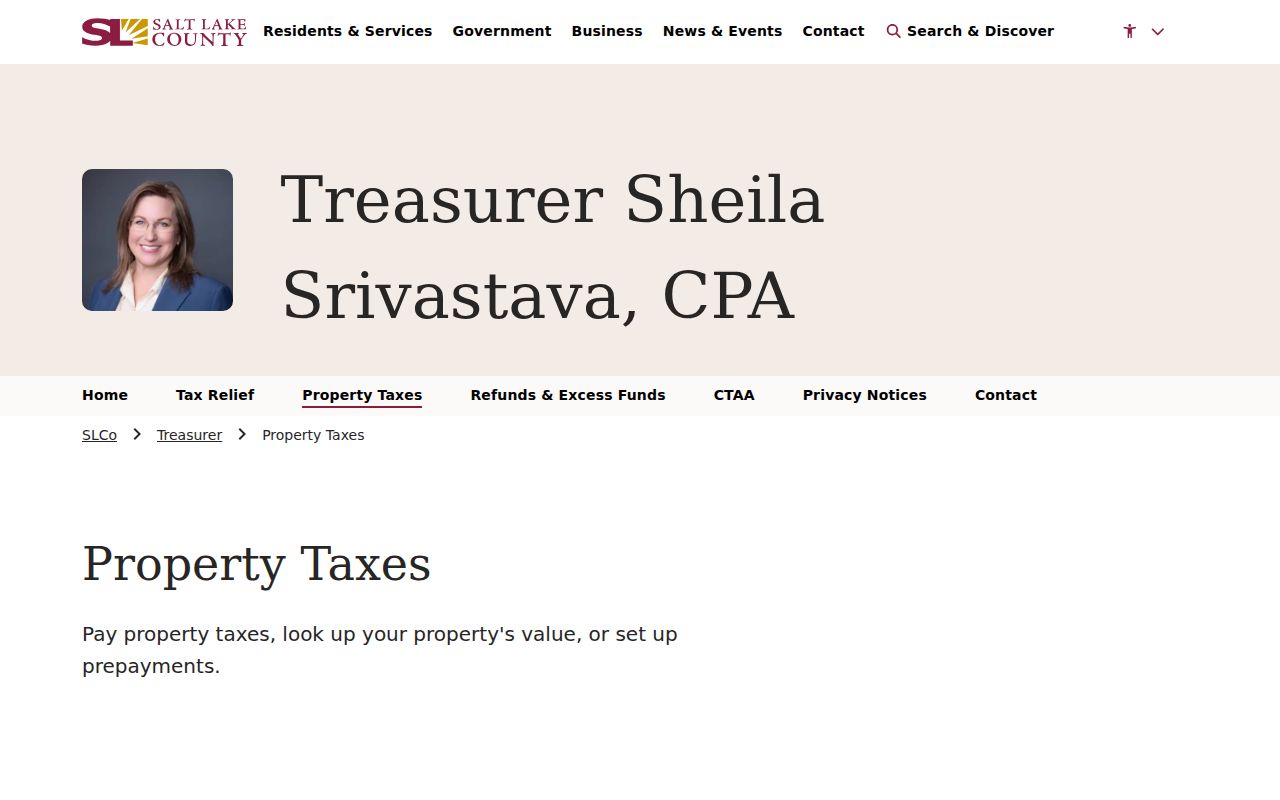
The Treasurer's page offers Find a Tax Notice, Pay My Property Taxes, Set Up Prepayments, Update My Address and Find Delinquent Property Balance. Resource links cover tax dates, tax codes, an example calculation, public service entities and a sample notice. Fields vary by service. Enter the parcel or notice identifier the screen requests. Not every page takes a street address.
The Treasurer's property tax service page presents the current routes.
File each notice with its parcel number, year, district and payment status. A prior PDF explains a past charge. Use the live delinquent-balance result for today's amount. If notices keep going to the wrong place, update the mailing address with the Treasurer.
Salt Lake County Tax Delinquency Dates
Salt Lake County mails the annual property tax bill in October. Pay nothing by November 30 and the full amount comes due. It goes delinquent January 1 with penalties, per the county FAQ. That calendar makes the notice year matter. A notice can be accurate for its issue date. It may still miss a later payment or penalty. Check the Treasurer's delinquent balance service before paying or comparing parcels.
A recorded tax lien, court case or sale notice is a separate event. Confirm it with the office that keeps it. Delinquent describes the tax account. It proves neither abandonment nor who holds title.
The sample notice lists the parcel reference, taxable value, taxing entities, certified rate and total due. Payment status appears there as well. Remittance details and an eBill option appear there too. Keep a copy with your payment record. The annual notice and the live account screen serve different dates. Rely on the current balance lookup when penalties or later payments may have changed the figure.
Salt Lake County Tax Districts
A Salt Lake County tax district groups the entities whose rates apply to a parcel. The Treasurer's tax-code material and the annual notice identify those entities and their certified rate. Two homes on one street can carry different bills. District combinations, taxable value or exemptions may differ.
Match the APN and tax year first. Then read the district code and entity list. Only after that should you compare totals. A parcel may sit inside a city, an unincorporated service area or another taxing geography. ZIP code alone will not reveal the district. The parcel's notice is the source for the charges tied to that property.
Exemptions in Salt Lake County Tax Records
Exemptions lower the value that actually gets taxed. That is why a notice can show a taxable figure below the Assessor's market value in Salt Lake County. The county applies any exemption after the assessment ratio. The Assessor's office holds the current eligibility rules and form fields, so confirm a specific exemption there rather than trusting a general label on the notice.
Compare the Assessor card and the current notice for the same tax year. The two records should match. Ask the Assessor about property-characteristic corrections, and ask the Treasurer how an exemption appears in the bill calculation. Keep a copy of each response. A value record explains the assessment. A tax record explains the charge once district rates and relief are applied, which is why the two figures rarely match on their own.
Appeal a Salt Lake County Assessment
Salt Lake County routes property-tax appeals through the Auditor and the Board of Equalization. A factual correction is not an appeal. Keep the two steps separate. That way a request about a building feature is not mistaken for a formal appeal filing. The county's online appeal page is the entry point for the formal process.
Deadlines and form fields change by tax year. The Auditor publishes the current instructions, so check the live Auditor tax appeal page and the current notice for the applicable date. Never infer the deadline from a prior tax cycle. Evidence should fit the property and tax year. The county prescribes no specific evidence checklist.
Owners can contact the Assessor during the year to correct factual details, such as a parcel characteristic, or discuss the valuation. The Assessor conversation is informal. Save the notice, parcel number and any written response. That paper trail ties the appeal to the value under review. The Board of Equalization runs its own process with its own current instructions.
Confirm the current cycle. The online appeal page and the parcel's notice are the sources for a live deadline. Do not infer an appeal window from a prior-year calendar.
Salt Lake County Tax Values and Bills
A Salt Lake County Assessor value is a mass-appraisal figure built for the tax roll. It is not the final bill. It is also not necessarily a recent sale price. The annual notice blends taxable value with district rates and any applicable exemptions, so a value change can shift the tax base without an identical change in the amount due.
To read a particular bill, compare the assessment year, tax district, certified rate, exemption and payment status. Each item tells a different part of the story. Market value questions belong on the property-value page. Locate the parcel first through the County Assessor search. For title ownership, the deed remains the recorded transfer. The tax notice names the account, but the deed records who actually holds title.
Access Salt Lake County Tax Records
Online services are not the only route. The Assessor runs an information counter at 2001 S State Street in Salt Lake City. Hours are weekdays, 8 a.m. to 5 p.m. Confirm hours before any visit about a specific account or appeal.
The Treasurer notice carries remittance and contact details, including a mailing address and email. Check the current County page before mailing anything.
Some county-held tax records never appear online. For those, submit a focused GRAMA request to the county through the Utah Open Records Portal. State the APN, tax year, document type and format wanted. Public access stays subject to privacy classifications and statutes.
The Treasurer's sample notice lists PO Box 144575, Salt Lake City, UT 84114-4575, fax 385-468-8301 and treasurer@saltlakecounty.gov. Treat these as notice details. The live page governs new payments and formal requests. Value questions go to the Assessor counter. It is open weekdays from 8 a.m. to 5 p.m.