
How Salt Lake County Property Records Fit Together
Salt Lake County land research works as a short chain rather than one stop. The Assessor turns an address or owner name into a parcel number and tax roll entry. The Recorder links that parcel to deeds, liens and plats. The Treasurer handles the tax notice and payment status. GIS maps sit with county GIS, and city permits sit with each city. Every office keeps its own record. The identifiers overlap, though. Working from an address alone means starting at the Assessor and carrying the full parcel number into the Recorder and Treasurer searches. Chasing deed history means beginning with the latest deed. When a boundary is disputed, compare the GIS view against the recorded plat and the deed's legal description. Treat any search result as a lead only. It is not a survey, appraisal or title opinion.
- Search the Assessor by address, owner or parcel and save the full APN, owner field and legal description.
- Open the Recorder property result with the address or APN selected from its autocomplete list.
- Read the document number, recording date and type before deciding which image is relevant.
- Check the Treasurer notice and GIS parcel view using the same APN.
- For older deeds, city permits or records outside the portal, ask the office or archive that holds that series.
Salt Lake County Property Records Offices
No single Salt Lake County portal covers ownership, assessment, payment and map data at once. Four offices hold the records separately. The County Clerk is not the deed recorder here, which trips up many people. Start with the office whose record answers your question. Then use the parcel number to connect the rest.
Salt Lake County Recorder
Public property and recorded-document search; image access is through Data Services.
Salt Lake County Assessor
Owner of record, parcel attributes and fair-market-value assessment.
2001 S State St., Salt Lake City, UT 84114-7421
385-468-8000
Treasurer and Auditor
Tax notices, payments, delinquent balances and assessment appeals.
The Assessor counter keeps weekday hours, 8 a.m. to 5 p.m., Monday through Friday. Recorder Data Services posts password support at 385-468-8145 and technical support at 385-468-8159. Recorder counter hours are not published the same way. Confirm before traveling. A public record may not be online. The Utah Open Records Portal then routes a GRAMA request to the office that maintains it.
Salt Lake County Property Record Types
Pick a record by what it proves. A parcel card proves tax and assessment facts. A recorded instrument is the county's filed document, nothing less. The parcel map is only a visual reference, and a city permit file logs approved work or inspections. Keep the APN and legal description in your notes. Street labels can shift. The recorded land description stays stable.
| Record | What It Shows | Keeper and Access |
|---|---|---|
| Deed, lien or plat | Recorded transfer, claim, easement or subdivision instrument | Recorder public index; paid Data Services for images |
| Assessor parcel card | Owner, situs and mailing address, values, tax district and parcel details | Assessor Parcel Search and classic viewer |
| Tax notice | Taxable value, entities, certified rate, amount due and status | County Treasurer services |
| Parcel map | Parcel geometry, APN labels and map context | Assessor GIS, County MapServer and Utah SGID |
| Permit or planning file | Permit, inspection, zoning or petition activity | City or municipal-services office for that jurisdiction |
For title history, rely on the Recorder instrument and its legal description. For value or exemptions, pair the Assessor with the Treasurer. A property search may surface a parcel. Yet the document image holds the deed language itself. The Salt Lake County deed records route explains that distinction in detail.
Salt Lake County Property Address and APN
Salt Lake County searches accept several starting points. Use a street address, owner name, APN, or legal description. The classic Assessor viewer splits an address into parts. These include frontage number, direction, street name, and type or direction. That structure matters. In a county grid, a single directional letter can separate two similar streets. The newer address flow uses autocomplete. Pick the suggested address or parcel rather than typing free text it may not recognize. The APN is the Assessor's parcel key. Its format shows four groups: a ten-digit base plus an optional four-digit encumbrance suffix. A legal description may cite section, township, and range. It may also name a platted lot and block. It can keep an older transfer findable after the street name or parcel reference changed. Copy the whole APN first. Shorten it only when the portal's instructions say so.
Salt Lake County Property Search Fields
The Salt Lake County Assessor Parcel Viewer opens behind a terms-of-use gate. Its classic search helps when the full address is unknown. Owner entry needs at least three letters. Personal names go last name, comma, first name. Business names can behave differently, so check an entity deed in the Recorder too. Adding one street component to a common owner name narrows a long list. The County Assessor's official Parcel Viewer shows the New Map and Old Map entry choices. Those options appear after the terms prompt.
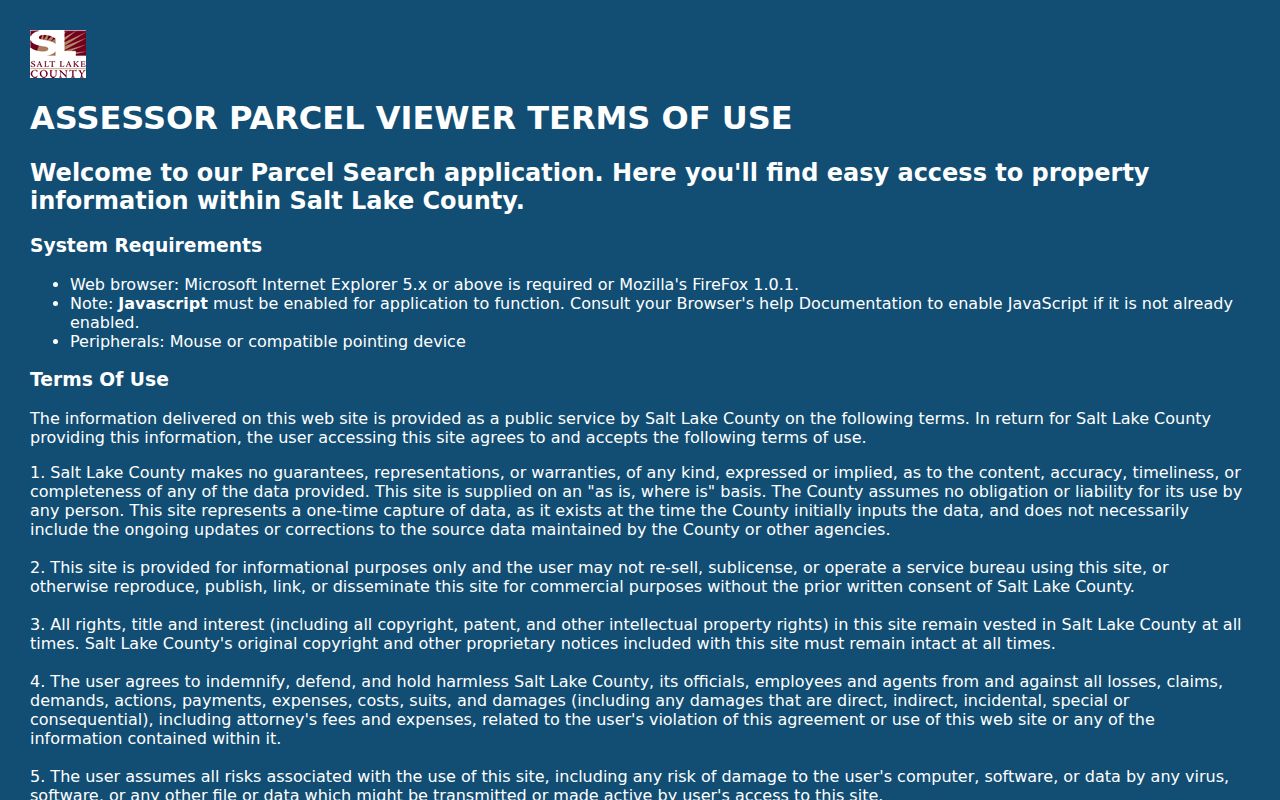
Use the address route for a known house. Use the owner field to find parcels tied to a name. The APN works best for an exact parcel match. The viewer displays a tax card plus links to map and tax information, but it is not the recorded deed image.
| Search key | Best use |
|---|---|
| Address | Locate a situs parcel; choose the autocomplete match |
| Owner | Find parcels tied to a name; use last name, comma, first name |
| APN | Open one parcel or, with the first seven digits, search a block |
| Legal description | Connect old plats, deed books and land whose address changed |
Salt Lake County Recorder Deed Results
The Salt Lake County Recorder Property Search takes an address or parcel number. Both come from an auto-populated list. Its notice states the data can be 24 hours old or more. Accuracy is not guaranteed. A title search may still be needed. Results can show the active parcel number, address, count of recorded documents, document number, recording date, document type, and current owner of record. They also show the legal description. That is the trail from parcel to deed. The Recorder's public property search is the route from the parcel to the recorded-document list.
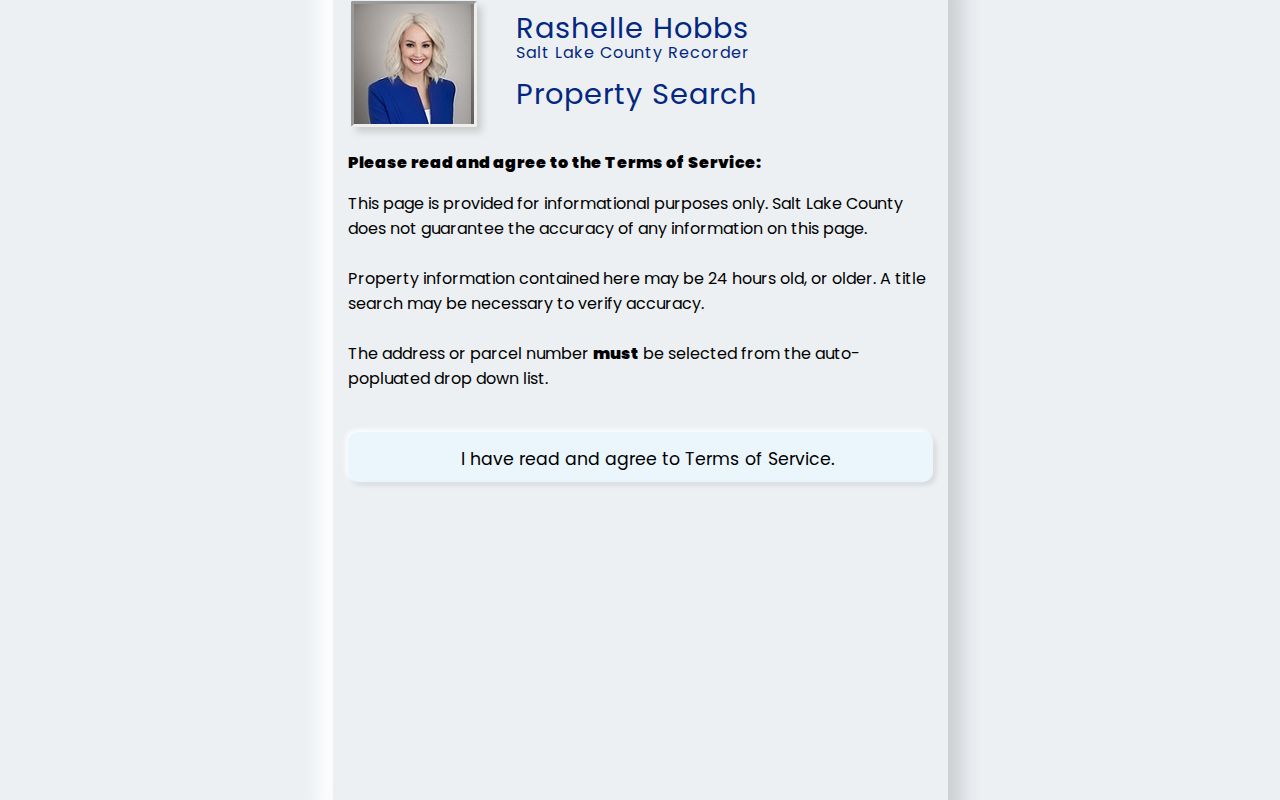
A sample search returned 29 documents and one current owner. Five of those deed records shared a recording date. A 2022 plat and a 2024 amendment followed close behind. The count is not a count of ownership changes. Read the instrument type, date, and legal description. A Salt Lake County row may look like a transfer. It may instead be a plat or an amendment.
The public index is not the document image. Data Services shows a $5 24-hour option and other image fees. Verify the schedule. For ownership, turn to the owner lookup method. It pairs the Assessor field with the latest deed.
Salt Lake County Property Tax Values
Salt Lake County Assessor values drive the tax calculation. Market value, taxable value, and the final tax bill remain distinct fields. Residential property gets a 55 percent assessment ratio. Other property classes are assessed at 100 percent. Exemptions adjust the taxable market value. The tax district's rate then produces the bill, which varies by parcel because local taxing entities and exemptions differ.
The Treasurer's property tax services page links to tax notices, payments, prepayments, address updates, and delinquent balances.
The annual notice goes out in October. Pay in full by November 30. If the full amount remains unpaid after that date, the balance turns delinquent on January 1. Penalties apply from that point. Use the live balance service for today's amount rather than a past notice. Assessment appeals go to the Auditor and the Board of Equalization. Owners can also ask the Assessor to correct property facts at any time of year.
Salt Lake County Parcel GIS Maps
Salt Lake County GIS pulls parcel information from the Recorder. The public parcel MapServer shows a single visible parcels layer and supports Identify, Query, Find, map export, and KML generation. It can return JSON, GeoJSON, or PBF, subject to technical record and selection limits. Those functions help locate adjacent parcels. The geometry is not a survey. Line disputes need a licensed survey. The County Assessor's GIS information page explains how parcels and legal descriptions feed the viewer.
The classic Assessor search accepts the first seven APN digits. Those digits represent area, section, and block. That gives a verified way to gather nearby parcel identifiers. It helps when a map selection gets awkward. Utah SGID also publishes basic and LIR parcel feature services. Keep the update date and the legal-record disclaimer attached to any saved export.
Salt Lake County City Permit Jurisdictions
Salt Lake County spans incorporated cities and unincorporated areas. The postal label never tells you which government handles a building permit. Salt Lake City points users to a county jurisdiction map. It notes that Magna, Kearns, Emigration Canyon, and other unincorporated areas receive service through the Greater Salt Lake Municipal Services District. Check jurisdiction before any permit search. Inside Salt Lake City, Citizen Access covers Building and Planning searches. County Assessor and Recorder systems still hold the ownership and tax records. West Valley City runs its own digital permit process with permitting contacts.
City files describe structures, inspections, zoning, and project review. They do not replace the county deed or parcel card, and a city-specific route is linked from the City Property Records card.
Salt Lake County Property Watch Alerts
The Salt Lake County Recorder offers Property Watch, a free email alert service for newly processed documents tied to an enrolled property. The enrollment form uses a county address dropdown. You add a contact name and email, and selecting the address populates the parcel number automatically. Alerts can cover deeds, liens, and reconveyance deeds, per the Recorder. Call 385-468-8176 for Property Watch support.
An alert is not a title search. It does not guarantee that no other document exists, and it never stops an instrument from being recorded. Compare alerts with the Recorder's document list. Ask Data Services for an image when needed. Confirm the right APN before enrolling. A nearby address or an old parcel number can point to a different lot entirely, so the parcel number matters more than the street.
Salt Lake County Historic Deed Books
The current Recorder portal posts no exact online start year. Treat that as a gap to verify. Old deeds may still exist. County retention material identifies permanent abstract indexes, property transfer records, and a deed-books index, which is where much of the older material lives. The microfiche index is dense with detail. It can list an owner's name and mailing address, legal description, tax ID, acreage, deed book and page, mortgage code, use, and values.
The Utah State Archives land-record guide describes deeds, tax rolls, subdivision indexes, and plats.
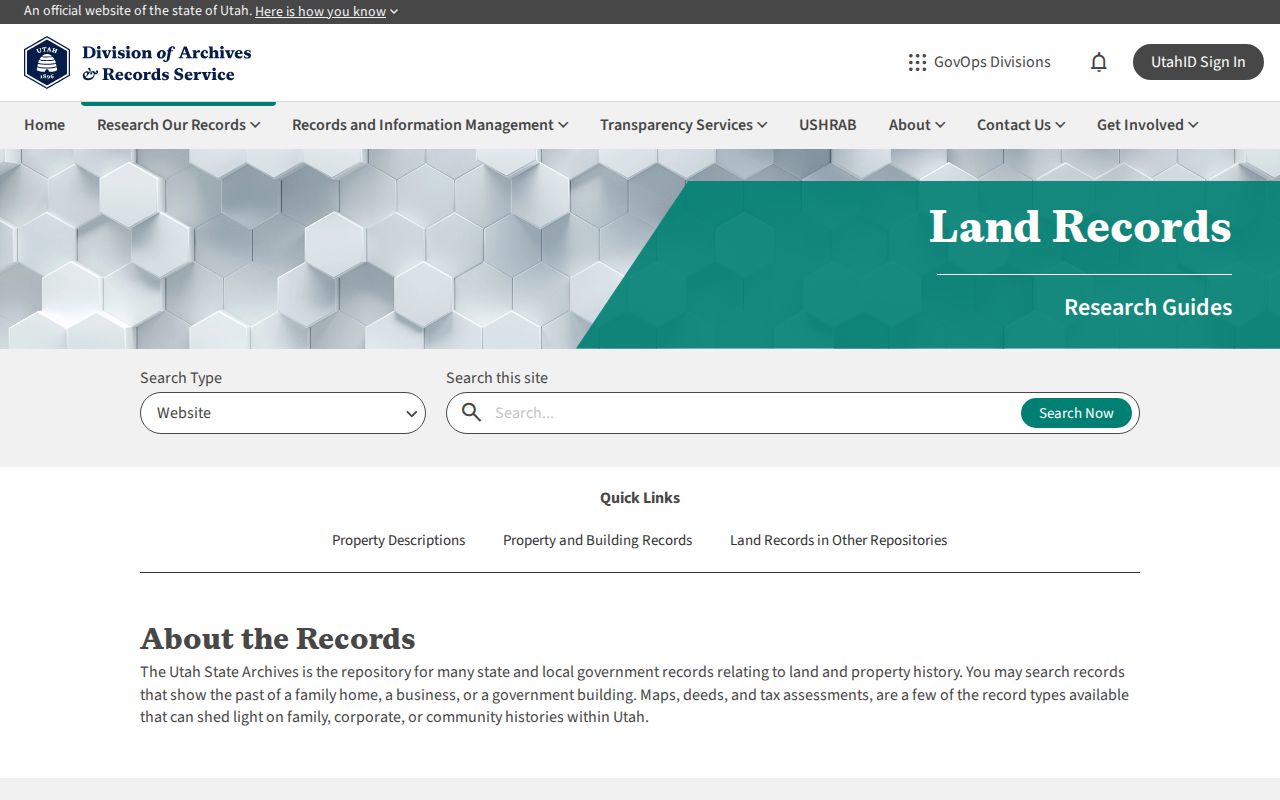
Save the book, page, and series reference. Then ask the Recorder or the Archives which index or microfilm holds the material. FamilySearch and the Marriott Library also help. Both are discovery aids, not the current title source. Salt Lake City Recorder records moved to county custody on April 5, 1867, so a nineteenth-century city deed can appear in Salt Lake County holdings.
Salt Lake County Court and Probate Records
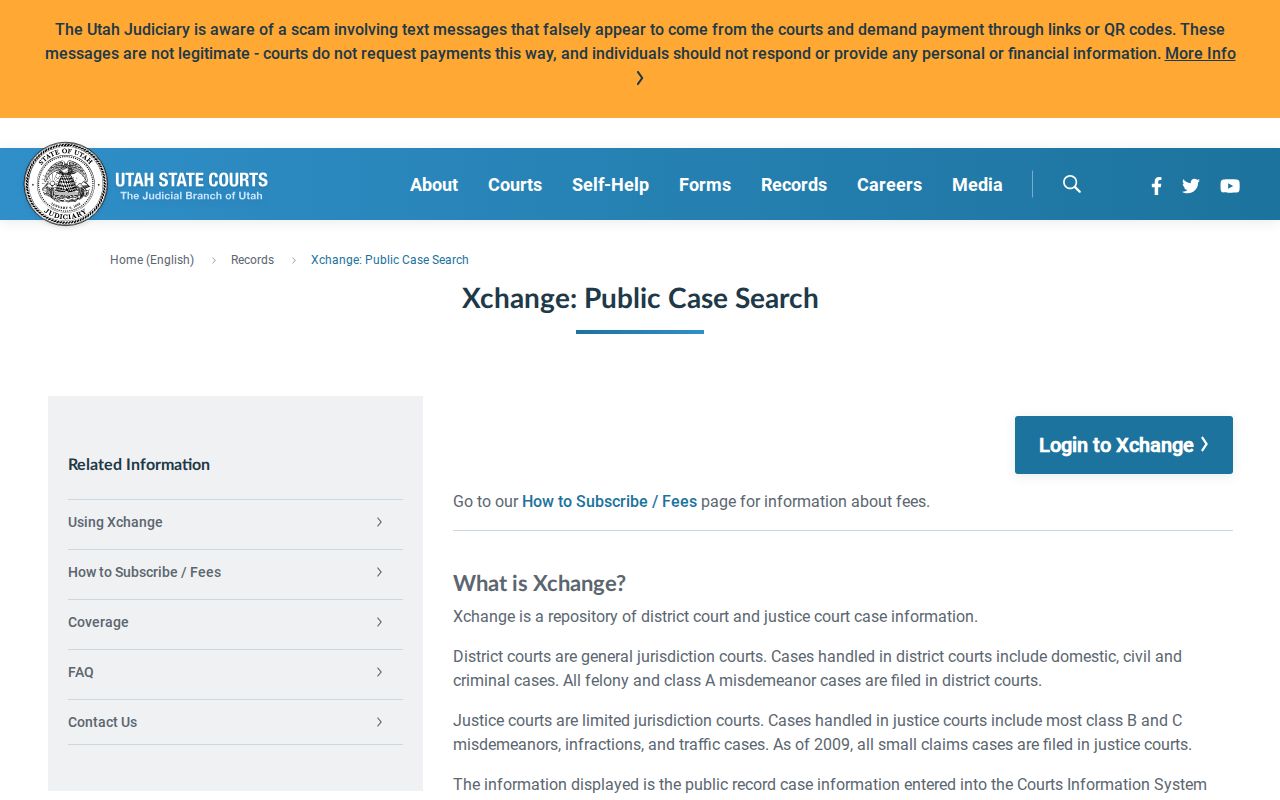
Court files sometimes tell the story a deed cannot. A foreclosure fight, a partition suit, or a quiet-title action over Salt Lake County land leaves a paper trail. That trail runs through the Third District and justice courts. Utah Courts Xchange opens that trail to the public. The official guide lists what a case search returns. Expect party names, judges, attorneys, filed documents, hearings, judgments and outcomes. Documents filed since July 1, 2010 sit in the system electronically. Converted cases from earlier years may hold fewer details. For a recorded lien or deed, though, the Recorder still has the final word. The Utah Courts Xchange coverage guide spells out exactly what the search includes.
The Xchange public search presents Guest, Pay Now, Login and Get Started options.
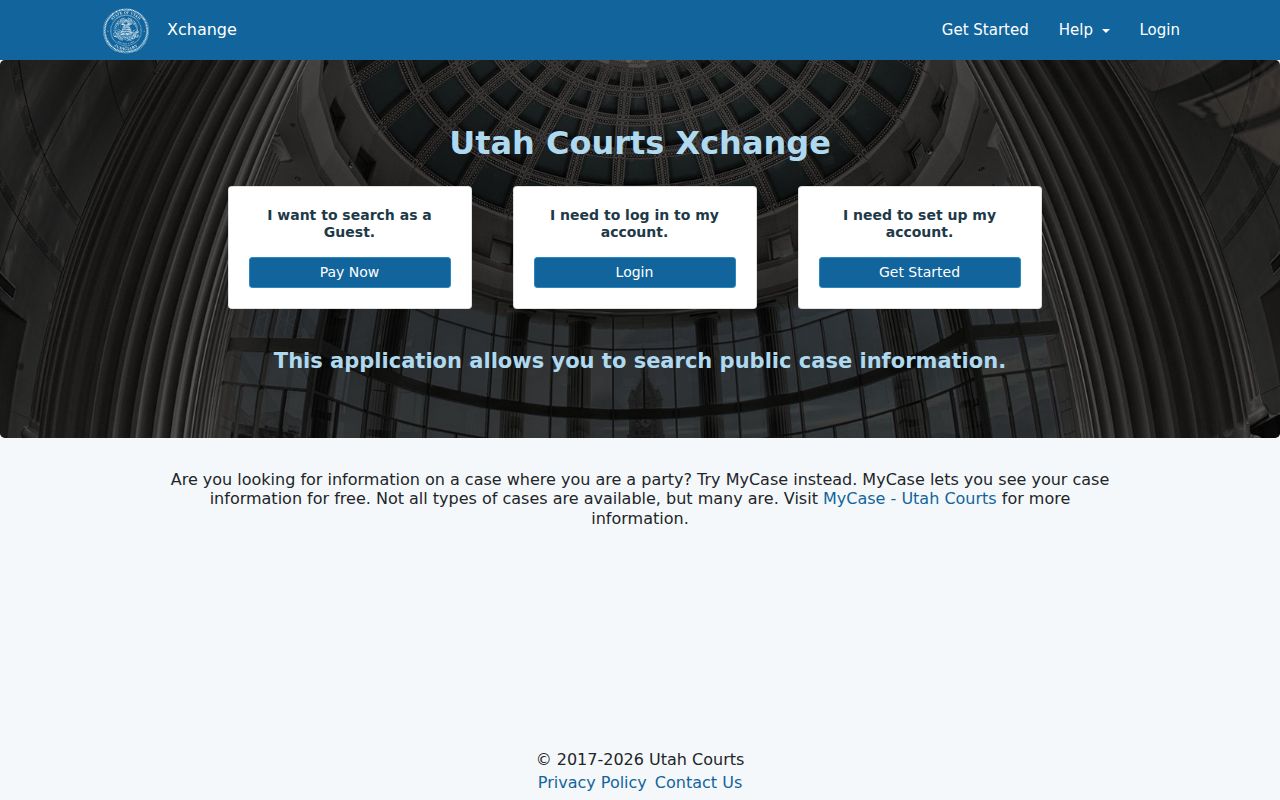
Those search terms belong to the court system, not the Recorder's deed images. Keep case numbers and party names beside your parcel notes. That way a court item lines up with the right property record.
Older estate work may lead to Utah Archives indexes. Salt Lake County Probate Court Series 373 holds civil and criminal files from 1852 through 1887. One series covers civil files. The other covers criminal matters. An estate order or a representative appointment can show how property changed hands. A death certificate alone proves nothing about title. Take the case name and date into the recorded deed search next.
Salt Lake County GRAMA Access
Some Salt Lake County records never make it online. Utah's Government Records Access and Management Act, called GRAMA, is the answer for those. File through the Utah Open Records Portal. Send the request to the entity that keeps the document. Name yourself, add a mailing address and phone if you can, and describe the record plainly enough that staff can find it. Helpful details include the office, parcel or APN, instrument or permit number, date range, and your preferred electronic format.
GRAMA has limits. It cannot unseal court records or override protected classifications. Ask an agency for its own administrative records; court files follow court rules instead. A denial is not the end. The appeal starts with the maintaining entity's Chief Administrative Officer. Keep your request, the response, fee estimate and dates in one file. For historic county series, archives research by appointment is another option.
Limits of Salt Lake County Records
Property records show recorded interests and tax-roll facts, nothing more. Private agreements often stay private. They cannot prove who lives at an address or settle an exact boundary line. The Assessor's owner field is a tax record, not a title opinion. A Recorder result is just an index lead until you read the instrument itself. A GIS line maps geometry. A value field reflects a mass appraisal rather than a sale appraisal.
Use records lawfully. Salt Lake County records support property research, civic review and due diligence. Do not use owner information to stalk, threaten or harass anyone, and ask the proper custodian or a qualified professional when a legal title or boundary answer is needed.
Cross-checking does the real work. For a current owner, set the Assessor roll beside the newest recorded deed. For boundaries, compare GIS against the plat and the deed description. Then bring in a licensed surveyor when precision counts. For value, keep market, taxable and sale figures separate. Those habits make Salt Lake County property records far more useful. No single database could do the same on its own.